Compliance Inspections
AI Software for Mandated Building Inspections
Facade ordinances, structural inspection cycles, and periodic assessments all require the same thing: documented, dated, located evidence of condition. Hammer Missions produces it, and keeps it inspectable when a finding is questioned.


What mandated inspections require
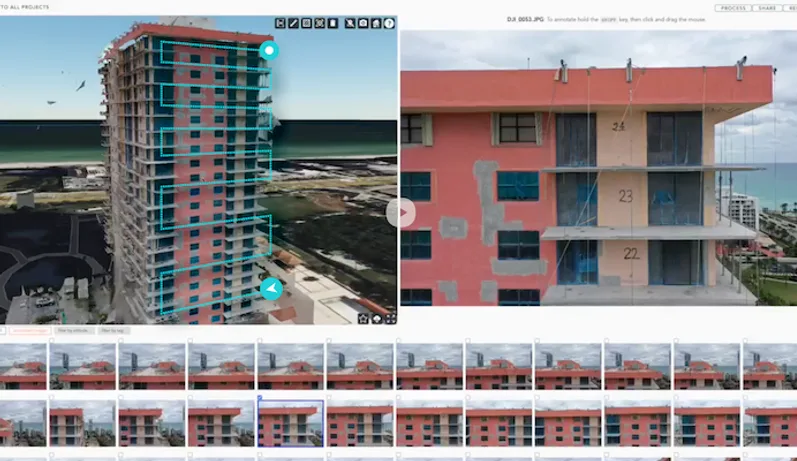
Most inspection mandates ask for evidence that is complete, located, dated, and attributable. A photo folder satisfies none of those reliably. A measurable 3D model with quantified defects, each anchored to its position on the asset and time-stamped, satisfies all four.
Complete
Full coverage of the asset rather than a sampled walk-around, so nothing is missing from the record.
Located
Every defect anchored to its position on a measurable 3D model, and measured rather than estimated.
Dated
Time-stamped records that support year-over-year comparison across inspection cycles.
Attributable
Author and timestamp retained on every annotation, so findings remain traceable to a person.
Evidence and workflow
How Hammer Missions supports compliance work
- Full asset coverage rather than a sampled walk-around
- Every defect located on the model and measured, not estimated
- Time-stamped records that support year-over-year comparison across inspection cycles
- Author and timestamp retained on every annotation, so findings remain attributable
- Exportable report packages that link to the live model
Note: the qualified inspector or engineer of record remains responsible for the assessment, the findings, and the filing. Hammer Missions supplies the evidence and the workflow.
Programs our customers work to
Asset owners use Hammer Missions to stay compliant, and engineering firms use it to conduct the inspections each program requires. These are some of the mandates our customers work to.
Facade ordinances
Cities including New York, Chicago, Boston, Philadelphia, Pittsburgh and San Francisco, along with the Province of Quebec, require periodic examination of exterior walls on taller buildings by a qualified professional, with height thresholds, inspection cycles and reporting rules set by each jurisdiction.
FISP, New York City
Owners of buildings greater than six stories must have exterior walls and appurtenances critically examined by a Qualified Exterior Wall Inspector, including close-up physical examinations along street-facing facades, and file a report with the Department of Buildings that classifies conditions as Safe, Safe With a Repair and Maintenance Program (SWARMP), or Unsafe.
Milestone inspections, Florida
Condominium and cooperative buildings three habitable stories or more in height must have a structural inspection by a Florida-licensed architect or engineer by the end of the year the building turns 30 (or 25 where the local enforcement agency requires it) and every 10 years thereafter, beginning with a visual Phase One examination that triggers a Phase Two inspection if substantial structural deterioration is found.
Balcony inspections, California
Exterior elevated elements (wood-supported balconies, decks, stairways, walkways and similar structures with walking surfaces more than six feet above ground) must be inspected every six years on apartment buildings with three or more units, covering at least 15 percent of each element type, and at least every nine years in condominium associations, using a random, statistically significant sample.
UK Building Safety Act
In England, accountable persons for occupied higher-risk buildings (at least 18 meters or seven stories tall with at least two residential units) must register the building with the Building Safety Regulator, assess and manage building safety risks from fire spread and structural failure, and keep the building's prescribed safety information, known as the golden thread, up to date throughout its life.
Frequently asked questions
Evidence your inspection cycle can stand behind
Capture the asset, quantify defects with AI, and produce documented, located evidence that stays inspectable across cycles. The qualified inspector or engineer of record remains responsible for the assessment and the filing.